Built to compute what programmes cannot see.
The hardest failures in complex programmes are not failures of effort or talent. They are failures of visibility: the consequence that crosses a boundary unseen, the slip that was real long before anyone could report it.
One execution layer, two ways in
Signetra works where decisions, dependencies and outcomes are tightly coupled and no single system holds the whole picture. We bring that picture into one place and make it computable.
DeliverXL computes a programme's true state from the systems it already runs on. Our Advisory practice works inside programmes where execution breaks down. The advisory exists to educate and to stand on its own; the platform stands fully on its own. Neither depends on the other.
Intelligence before impact.
Most programme failures are not caused by unknowns. They are caused by knowable things that were not surfaced in time.
Our advisory practice works directly inside execution environments where visibility, coordination and consequence are tightly coupled. Our Foresights publication explores the structural patterns, emerging risks, and execution signals that shape tomorrow's programmes while there is still time to act. And DeliverXL computes what human coordination cannot scale to cover: the forming gaps, unconfirmed dependencies, and silent absences that become schedule and cost failures.
Three capabilities. One foundation: intelligence delivered at the moment decisions can still change outcomes.
Execution, computed continuously
Programme state should not be assembled by hand, after drift has already formed. It should be computed continuously and surfaced while recovery is still possible.
Status tools record what was reported. Dashboards present what was already entered. None of them compute consequence as it travels across the boundaries where programmes actually break. That is the gap Signetra is built to close.
Complex programmes, under real pressure
Automotive is our entry point, not our boundary. Drift forming across functions, suppliers and gates is common to any programme where many parties must stay coherent over a long horizon.
Automotive programmes
Multi-supplier vehicle and component programmes where engineering, validation and supply must hold together across gates and time.
Engineering-led organisations
Environments where change cascades across disciplines and a decision in one place lands as a surprise in another.
Adjacent high-complexity sectors
Industries that share the same coupling of decisions, dependencies and outcomes over long delivery horizons.
Built by people who lived the problem
That observation sits at the heart of Signetra. Success in complex programmes depended on a small number of individuals who could reconcile information, connect signals, and spot risks before they became visible to everyone else. The question that led here was simple: what happens when the organisation becomes too complex for even those people to hold together?
The programme was not being held together by the systems. It was being held together by people.
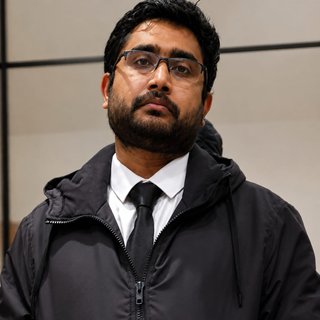
Shantan Vemuganti
Most programme failures do not begin with a bad decision. They begin with an invisible one.
Time and again I encountered programmes that appeared healthy right until they did not. The outcome had formed gradually through hundreds of interactions and local decisions that made sense individually but collectively created risk. The earliest signals were often already present. Not hidden. Present. No system was responsible for connecting them.
That works remarkably well until it does not.
My responsibility at Signetra is to make sure the problem we are solving stays honest: rooted in what programmes actually experience, not what is convenient to build. I spent my career inside that problem before I started building the answer to it. That is the only credential that matters here.
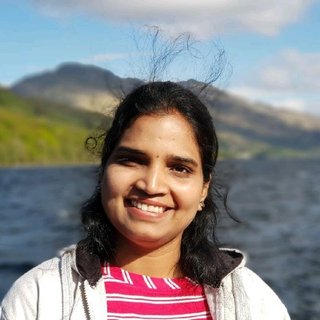
Himaja Vemuganti
Every system reflects assumptions. My job is to challenge them.
DeliverXL is designed to reveal what organisations struggle to see. But that only matters if the conclusions it reaches can be trusted. I am not focused on whether the platform produces an answer. I am focused on whether the answer deserves confidence: whether the logic holds when confronted with incomplete information, conflicting evidence, and the unpredictability of how programmes actually behave under pressure.
Shantan asks whether hidden risk can be surfaced. I ask whether that conclusion can withstand scrutiny. DeliverXL needs both questions answered before anything reaches a customer.
“What happens when organisations can no longer find enough people to carry the complexity?”
For years, that question remained an observation. Eventually it became impossible to ignore. That observation became Signetra.
We did not start the company because we believed programmes were becoming more complex. We started it because we had seen the cost of asking people to carry that complexity alone. Everything we build traces back to that.